Test both control paths
Manual and automatic operation can use different switches, fuses, feeds, splices, and logic. Each circuit is tested under load instead of assuming one working mode proves the other.
 IRONWAKECUSTOMS(202) 600-6906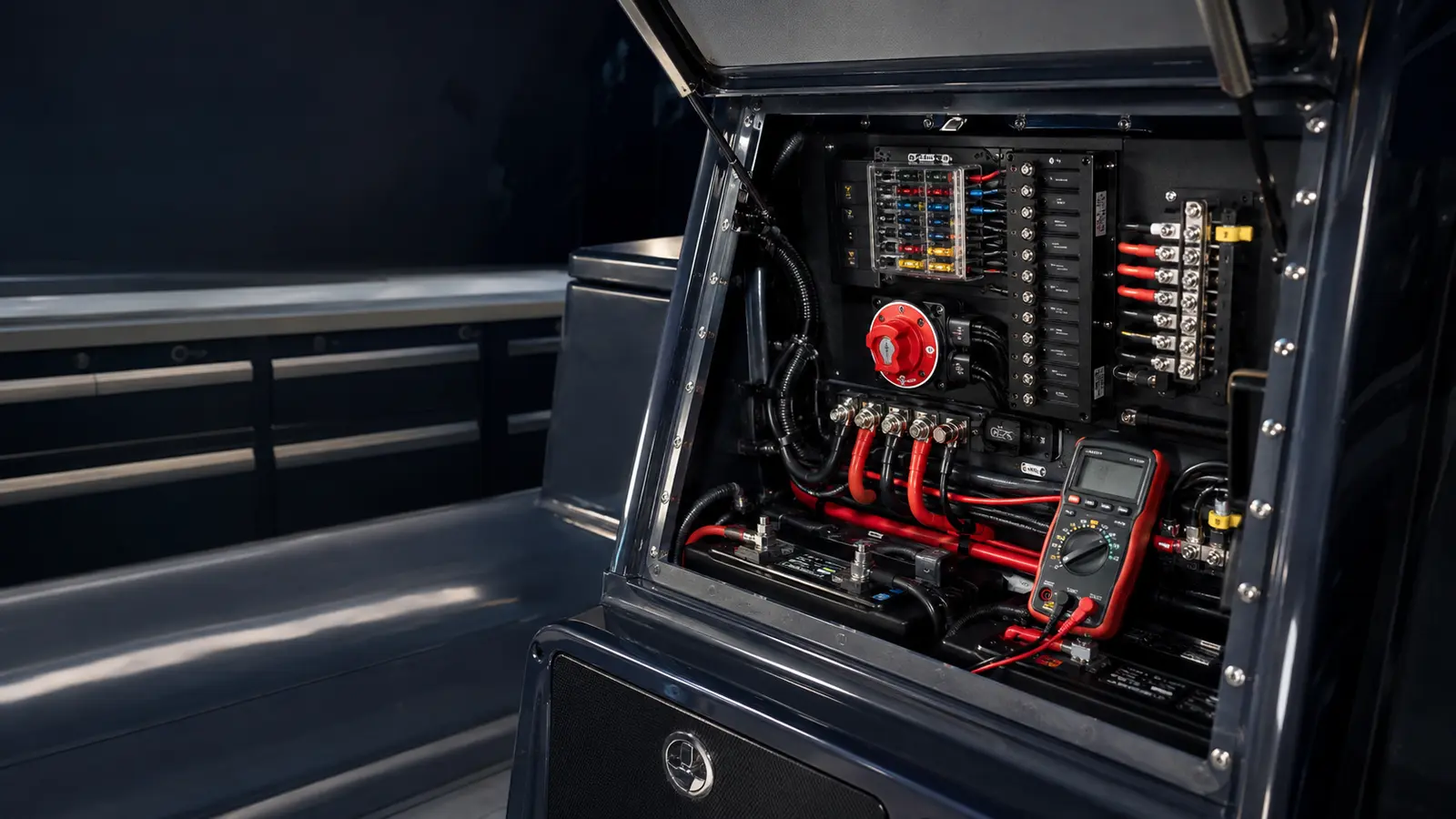
Bilge-pump diagnosis · Colonial Beach region
Prove the water source, power path, switch, pump, and discharge route before replacing the part in the lowest corner of the boat.
The search that brought you here
For boat owners searching for bilge pump repair, automatic float-switch service, a bilge pump that will not turn on, repeated cycling, weak discharge, or marine electrical help near Colonial Beach, Dahlgren, King George, the Northern Neck, and genuinely served nearby Southern Maryland.
A pump that is silent may have lost its automatic feed, fuse, ground, switch, connection, or motor. A pump that runs without lowering the water may have a blocked inlet, low loaded voltage, air lock, damaged impeller, restricted hose, excessive lift, backflow, or a discharge outlet that becomes submerged. A pump that cycles every few minutes may be doing its job while a drain, fitting, bellows, livewell, raw-water circuit, deck leak, or hull opening keeps refilling the bilge. Ironwake traces the system from water source to discharge and separates supported repair from a leak, hull, plumbing, battery, or broader marine-electrical project. A bilge pump is not a substitute for repairing water entry and is not emergency damage-control equipment for major flooding.
Tell us about the vehicle, truck, or boat →Manual and automatic operation can use different switches, fuses, feeds, splices, and logic. Each circuit is tested under load instead of assuming one working mode proves the other.
Motor sound is not flow. Pump condition, loaded voltage, inlet access, hose size and routing, vertical lift, outlet position, backflow, and siphon protection shape what reaches the outside of the boat.
Repeated cycling is documented by water source, rate, weather, trim, engine or plumbing use, and backflow pattern so a new pump is not asked to hide a leak or poor discharge layout.
What the project may include
Project fit depends on the trailered boat, pump and switch design, circuit access, battery arrangement, discharge plumbing, water source, corrosion, prior work, applicable manufacturer information, component support, and overall hull and systems condition. Inspection determines whether the work belongs in the pump, automatic or manual control, protected power path, alarm, hose and outlet, water-entry repair, or a separate marine-electrical or fiberglass scope.
A deliberate service sequence
The useful sequence protects people first, records the water pattern, identifies the installed components, tests the electrical paths under load, measures the discharge path, finds why water arrived, and validates the approved repair. Exact tests follow the boat and equipment instructions rather than a universal wire color or pump rating.
Secure the trailered boat, isolate unstable supports, inspect the bilge for fuel odor, visible fuel, oil, submerged conductors, damaged insulation, heat, smoke, or arcing, and stop if the water level is rising or stability is changing. Gasoline vapor and electrical switching are a dangerous combination. Do not reach into moving water around unknown wiring or bypass protection with a loose jumper. When flooding is active, the source is unknown, or the pump cannot keep up, prioritize people and emergency or marina assistance instead of treating the switch as the solution.
Record whether the pump is silent, hums, spins dry, runs continuously, cycles at a repeatable interval, works only at the helm, works only when a float is moved, blows a fuse, drains the battery, or moves water slowly. Note water depth, rainfall, launch and retrieval, trim, shore-power status, battery-switch position, engine use, washdown, livewell, freshwater, sanitation, cooling, and recent repair history. Marking water level and time can distinguish continuous entry from backflow after each cycle, but testing stops if the situation becomes unsafe.
Record pump and sensor model numbers, voltage, recommended fuse, wire-size requirements, hose size, maximum lift information, discharge fitting, seacock or loop where present, battery bank, panel switch, automatic feed, alarm, and any shared plumbing. Some systems use a separate mechanical float, others a three-wire automatic pump, and others electronic sensing that cannot be tested by lifting the housing. Trace the installed diagram and label unknown conductors rather than relying on color. Confirm whether the automatic feed remains available with the main battery switch off and how the owner is expected to test the system.
Check battery condition, fuse or breaker, holder, manual switch output, automatic feed, float or electronic sensor, splices, connectors, positive conductors, and ground while the pump is commanded on. Open-circuit voltage can appear normal through a corroded connection; loaded voltage drop and current behavior reveal whether usable power reaches the motor. Inspect connections for moisture, unsupported weight, chafe, heat, corrosion under insulation, and location below the expected water level. A larger fuse is not a repair for repeated opening, and automotive-style unsealed splices do not become suitable because the pump briefly runs.
Remove debris and inspect the strainer, inlet, impeller, mounting, access, and pump orientation by the manufacturer procedure. Follow the hose for collapse, sharp bends, loose or doubled clamps, delamination, restrictions, low spots, shared connections, backflow devices, loop height, seacock, and outlet position through the boat's usable trim and heel. Compare actual discharge with manufacturer performance information at realistic vertical lift and voltage rather than the zero-head number on a package. A spinning motor does not prove that water leaves the boat, and a restrictive check valve should not be treated as the only anti-siphon plan.
Dry and observe the bilge methodically, then inspect applicable drain plugs, garboard drains, hull and transducer penetrations, trim-tab fasteners, livewell and baitwell plumbing, raw-water strainers, washdown and freshwater systems, scuppers, deck drains, windows, rub rail, shaft log, stuffing box, sterndrive bellows, engine cooling, exhaust, and rain paths. Water temperature, color, salinity, odor, soap, oil, timing, and entry location can narrow the source without proving it. A larger pump may provide different capacity, but it cannot make a leaking fitting, damaged hull, failed hose, or submerged discharge acceptable.
After the supported fault is repaired, secure the pump and hose, restore strainers, covers, clamps, sealed connections, circuit protection, labels, switch logic, battery behavior, and alarm function. Test manual operation, automatic start and stop, loaded voltage, current, discharge flow, backflow, and shutdown at controlled water levels using the manufacturer method. Recheck after launch, rain, engine or plumbing use, and changes in trim when safe and applicable. Document pump, switch, fuse, wire, hose, outlet, test method, water source findings, and any separate hull, plumbing, battery, or electrical work still required.
Local, appointment-based project work
Ironwake Customs is based in King George County and evaluates supported bilge-pump, float-switch, alarm, wiring, discharge, and related water-entry concerns on trailered boats for owners from Colonial Beach, Dahlgren, Fredericksburg, Stafford, Spotsylvania, the Northern Neck, and genuinely served nearby Southern Maryland by appointment. Potomac and brackish-water use can add corrosion, debris, wet connectors, seasonal battery discharge, stiff hose, seized clamps, and difficult access. Send the boat make and model, pump and switch labels, battery and panel arrangement, photos of the complete bilge and discharge route, the exact manual and automatic symptoms, water depth and cycle interval, rain or operating pattern, fuse and wire details, voltage or current readings if available, recent repairs, and any parts already purchased.
Check project fit ↗Useful planning references
These public, manufacturer, and industry resources add useful context for identification, system support, safety, and compliance. The exact vehicle and approved project scope still control the repair plan.
The pump manufacturer's manual explains model-specific wiring, fuse, mounting, discharge, testing, and maintenance instructions and warns that the system is intended for normal water in an intact small craft rather than flooding from hull damage.
Open source ↗American Boat & Yacht CouncilABYC's standards portal is the authoritative entry point for current recreational-boat guidance relevant to electric bilge-pump systems and AC/DC electrical installation; the applicable edition and exact boat still control the work.
Open source ↗U.S. Coast Guard Boating Safety DivisionThe Coast Guard index identifies the federal electrical, fuel, ventilation, flotation, and other recreational-boat regulations that may matter when a pump repair intersects wiring or gasoline-vapor spaces.
Open source ↗Questions owners ask before starting
The motor and manual circuit may be usable while the automatic fuse, constant feed, float or electronic sensor, splice, ground reference, wiring, or test method has failed. Trace the exact installed diagram and test both circuits under load; do not assume wire colors or bypass the automatic protection.
Water may be entering continuously, discharged water may be returning, or the float or sensor may be stuck or contaminated. Air lock, restrictive hose, outlet submersion, siphoning, switch wiring, and some intelligent-pump protection cycles can create similar patterns. Measure the water source, cycle interval, and discharge result before replacing the pump.
The inlet or impeller may be blocked, the pump may be air-locked or damaged, loaded voltage may be low, the hose may be kinked, collapsed, disconnected, restricted, or routed with excessive lift, or the outlet may be blocked or allowing backflow. Stop extended dry running and inspect the complete inlet-to-outlet path.
Capacity planning may be appropriate, but a larger pump does not repair the source of water, weak wiring, a restricted hose, poor outlet position, backflow, or unsafe hull or plumbing damage. The boat, available power, fuse and wire requirements, hose and thru-hull, lift, access, alarm strategy, and applicable instructions must be evaluated together.
No. Use the protection specified for the exact pump and installed wiring. A repeated fuse opening can indicate a jammed or failing motor, damaged conductor, water intrusion, short, undersized wire, poor connection, incorrect fuse type, or installation problem. Increasing the fuse can overheat wiring before the fault is found.
Many boats provide a separately fused automatic feed, but wiring designs vary. Identify the boat and equipment diagram, battery arrangement, isolation requirements, and switch logic before changing the circuit. Any always-available feed still needs correct protection, routing, connection, labeling, and a dependable way to test it.
Send the boat make, model and year; pump, float or sensor, alarm and panel labels; battery-bank and switch details; fuse and wire sizes; hose size and outlet photos; clear images of the entire bilge and discharge route; whether manual and automatic modes work; water depth, cycle interval and source clues; recent rain, launch, engine or plumbing use; readings or test results; prior repairs; and parts already purchased. Inspection may still be needed before pricing.
The project needs a real starting point
Ironwake will review the vehicle, current condition, intended use, and requested scope before recommending the right next step.
Start the conversation ↗