Preserve the evidence
Drain into a clean container, document free water, color, odor, quantity, and plug debris, and photograph the propeller, shaft, skeg, housing, and leak paths before cleaning or refilling hides the clues.
 IRONWAKECUSTOMS(202) 600-6906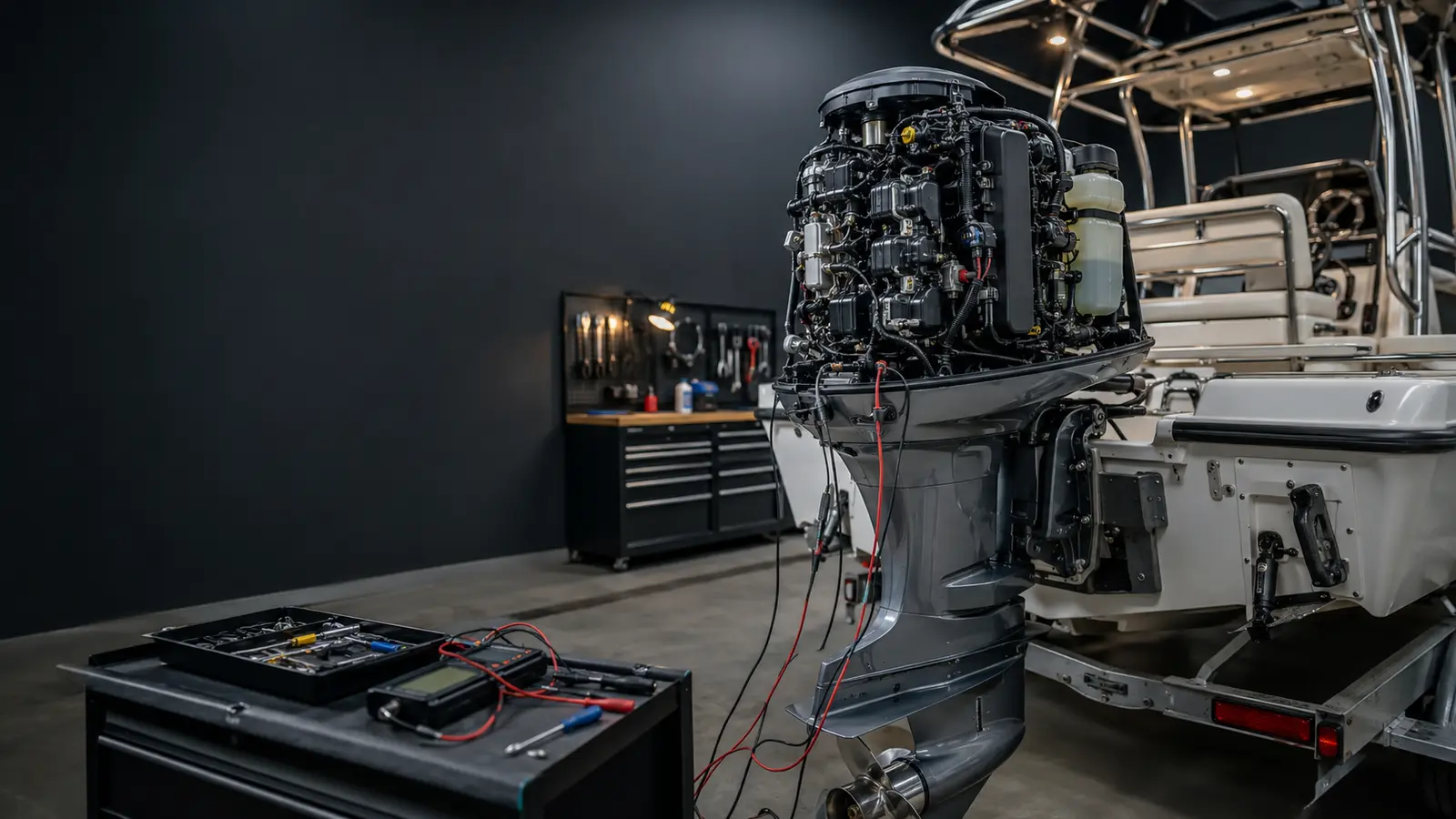
Outboard gearcase diagnosis · Colonial Beach + Potomac
Find the leak, impact, shift, or internal warning before the gearcase loses another season.
The search that brought you here
For boat owners searching for outboard lower unit repair, gearcase leak testing, water in outboard gear oil, prop-shaft seal inspection, or lower-unit diagnosis near Colonial Beach, King George, Dahlgren, the Northern Neck, and the Potomac River.
The lower unit turns engine power into propeller thrust while operating underwater under repeated load. Water-contaminated lubricant, fishing line around the prop shaft, impact damage, bent shafts, worn seals, damaged drain-screw seats, shifting faults, abnormal noise, and internal wear can overlap. A responsible repair begins by preserving the lubricant and debris, identifying the exact gearcase, inspecting the external damage, and using the manufacturer's procedures before deciding whether the work is a seal, shaft, housing, control, or internal gear-and-bearing problem.
Tell us about the vehicle, truck, or boat →Drain into a clean container, document free water, color, odor, quantity, and plug debris, and photograph the propeller, shaft, skeg, housing, and leak paths before cleaning or refilling hides the clues.
Use the exact model procedure, correct adapter, and specified pressure and vacuum limits while moving applicable shafts and controls; excess test pressure or a stationary-only check can create damage or miss the leak.
Separate supported external service and sealing work from bent shafts, cracked housings, gear or bearing damage, machining, and specialist rebuilding that cannot be priced responsibly before inspection.
What the project may include
Project fit depends on the outboard make, model and serial number; gearcase design; service information; lubricant condition; impact history; corrosion; parts support; prior repairs; shaft and housing condition; and whether internal rebuilding, machining, or another specialist process belongs in the documented plan.
A deliberate service sequence
The exact service steps and limits come from the identified outboard. The sequence below keeps the diagnosis tied to physical evidence and prevents a quick refill from masking a leak, damaged part, or shifting problem.
Record whether the problem followed a grounding, propeller strike, fishing-line encounter, winter storage, water-pump service, gear-lube change, or shifting event. Note new noise, vibration, leakage, difficult engagement, propeller damage, alarm history, and the water where the boat operated. Milky lubricant, free water, large metal pieces, grinding, binding, loss of propulsion, a cracked case, or a bent shaft calls for transport and inspection rather than another test run.
Document the engine make, model, serial number, year when confirmed, shaft length, gearcase family, rotation, propeller, recent parts, and service history. Similar housings can use different lubricants, sealing washers, test limits, fill procedures, torque values, shafts, bearings, shims, and shift adjustments. Parts should not be ordered from appearance or horsepower alone.
Position the engine as the manufacturer specifies and drain the gear lubricant into a clean container. Observe whether free water appears first, whether the oil remains milky after standing, its amount and odor, and the type and size of material on magnetic plugs. Photograph the drain sequence and retain useful samples. Inspect the propeller, fishing line, prop shaft, carrier, seals, skeg, anti-ventilation plate, drain and vent seats, washers, threads, and housing for leakage, scoring, corrosion, distortion, cracking, or impact.
Remove and inspect the propeller by the applicable procedure, then evaluate shaft movement and runout when impact is suspected. A new seal cannot compensate for a bent, grooved, corroded, or moving shaft. Confirm whether the shift complaint begins in the remote control, cable, linkage, adjustment, shift shaft, clutch or gearcase, and avoid forcing engagement. Inspect the accessible driveshaft and water-pump area when the approved scope requires lower-unit removal, because driveshaft sealing and prior service can affect the leak path.
With the lubricant drained, use the correct adapter and the manufacturer-specified pressure, vacuum, duration, and operating sequence. Rotate the driveshaft and prop shaft and move the shift mechanism only as the procedure directs so seal lips are observed in relevant positions. Approved leak-detection solution may help reveal an external path. Do not exceed the test limit, use shop air without control, or assume one passing static test proves that shafts, gears, bearings, and housings are sound.
Group the findings into sealing hardware, external seals or surfaces, propeller and shaft damage, shift-control or adjustment concerns, housing damage, and suspected internal gear or bearing faults. Supported service may include specified lubricant and washers, accessible sealing work, external repair, control correction, or related marine-engine work. Bent or worn shafts, damaged carriers, cracked housings, gear or bearing damage, shimming, machining, welding, and complete rebuilding may require teardown, measurement, parts research, or coordinated specialist work. Ironwake does not promise that scope before the gearcase is identified and inspected.
After the approved repair, repeat the applicable leak tests, install specified one-time sealing washers and hardware, fill with the exact lubricant and method, and torque fasteners to the model procedure. Confirm shift operation and propeller retention before a controlled return to service. Recheck the exterior, lubricant sample, noise, vibration, engagement, temperature, and leakage after the interval defined for the repair. Record the parts, lubricant, measurements, test results, and any remaining internal or specialist recommendation.
Local, appointment-based project work
Ironwake Customs evaluates outboard lower-unit concerns for trailered boats from Colonial Beach, King George, Dahlgren, Fredericksburg, Stafford, Spotsylvania, the Northern Neck, and genuinely nearby Southern Maryland by appointment. For an initial project review, send the boat and outboard make, model, serial number, hours when available, propeller details, exact symptom, drained-oil photos, debris found on the plug, impact or fishing-line history, recent lower-unit or water-pump work, service records, visible damage, and parts already purchased. A physical inspection, leak test, and measurements may still be required before the repair path, outside specialist needs, parts, or estimate can be defined.
Check project fit ↗Useful planning references
These public, manufacturer, and industry resources add useful context for identification, system support, safety, and compliance. The exact vehicle and approved project scope still control the repair plan.
Manufacturer guidance explains prop-shaft inspection, fishing-line risk, milky lubricant, pressure testing, metal on the drain screw, nonreusable sealing washers, and model-appropriate gear-lube service.
Open source ↗Mercury MarineMercury's maintenance overview identifies milky gear oil as water evidence, calls for checking metal debris, and reinforces using the specific outboard's service schedule and procedure.
Open source ↗Mercury MarineThe manufacturer resource adds useful safety and inspection context for propeller damage, hub condition, grounding evidence, and work around the prop shaft before lower-unit decisions are made.
Open source ↗Questions owners ask before starting
Persistent white, cream, tan, or coffee-colored gear lubricant can indicate water mixed with the oil. Freshly operated lubricant can also hold fine air bubbles, so preserve a clean sample and follow the manufacturer's inspection procedure. Free water, corrosion, metal, or a failed leak test strengthens the evidence of an active problem.
Do not continue normal operation. Water reduces the lubricant's ability to protect loaded gears and bearings, and another trip can add corrosion, surface damage, heat, and debris. Drain and document the oil, locate the entry path, inspect for internal warning signs, and repair the cause before returning the boat to use.
A seal can behave differently under positive pressure and vacuum as the gearcase heats, cools, and operates. Model-specific testing can help locate paths at prop-shaft, driveshaft, shift-shaft, carrier, drain-screw, or housing interfaces. The correct limits matter because excess pressure can damage seals or create a misleading result.
Yes. Line wrapped behind the propeller can work into the prop-shaft seal area and damage a seal or sealing surface. Remove the propeller safely, inspect the line and shaft, and leak-test the gearcase rather than assuming that removing the line solved the water-entry path.
A brief engagement sound is not the same as repeated grinding, delayed engagement, jumping out of gear, binding, or loss of drive. Control position, cable or linkage adjustment, shift-shaft setup, propeller load, clutch components, gears, bearings, shafts, and prior work can contribute. Avoid repeated forced shifts and identify the complete control-to-gearcase path.
No blanket in-house rebuilding claim is made. Ironwake can evaluate the installed gearcase, perform supported service and repair work, and define when internal teardown, shimming, machining, shaft or housing work, gear replacement, or another documented specialist process belongs in the project plan.
Send the boat and outboard make, model and serial number; hours when available; propeller information; exact symptoms; when they began; impact, grounding, fishing-line and storage history; drained-lubricant photos; metal or debris observations; recent service; leak-test results if professionally obtained; clear gearcase photos; and parts already purchased. Inspection may still be necessary before pricing.
The project needs a real starting point
Ironwake will review the vehicle, current condition, intended use, and requested scope before recommending the right next step.
Start the conversation ↗